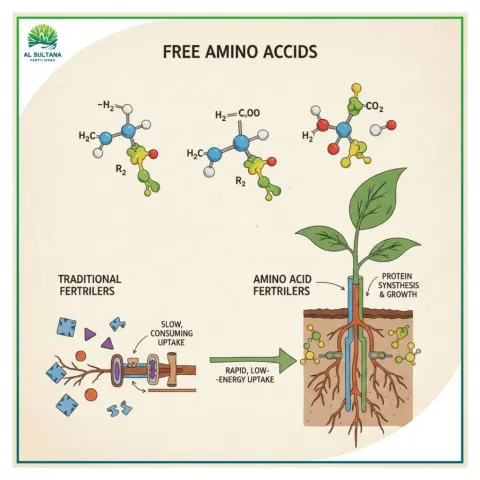
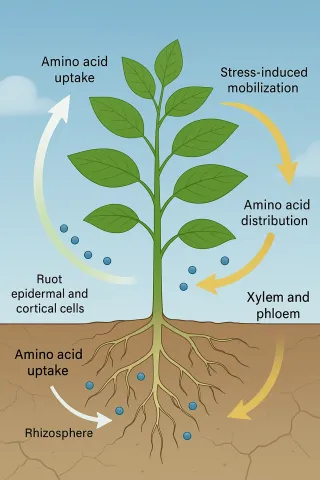
Amino acids act as a metabolic shortcut for plants, saving them energy, speeding up growth, and improving stress recovery by allowing them to skip the energy-intensive process of synthesizing nitrogen into organic building blocks.
Key Benefits of Amino Acids
- Energy Savings: Plants absorb amino acids directly, saving the ATP normally used to convert basic nitrates into proteins.
- Nutrient Uptake: They act as natural chelators, binding to micronutrients like iron, zinc, and calcium to make absorption easier.
- Stress Resistance: They help plants recover quickly from drought, cold, heat, or transplant shock.
- Photosynthesis Support: Specific types like glycine boost chlorophyll production and enzyme activity.
Important Amino Acids and Roles
- Glycine & Glutamic Acid: Precursors for chlorophyll synthesis and enhanced photosynthesis.
- Tryptophan: Acts as a building block for plant growth hormones (auxins) that stimulate root elongation.
- Arginine: Promotes overall plant vigor, cell division, and reproductive development.
- Proline: Protects cells and maintains water balance during drought or high salt stress.
How to Apply
- Sources: Found in commercial liquid fertilizers, fish hydrolysate, and seaweed extracts.
- Methods: Can be applied via foliar spray for fast absorption during stress or soil drench to stimulate beneficial microbes.
Q&As